
Teaching grammar doesn’t have to be boring! Many ESL teachers struggle with making grammar lessons engaging, but with the right approach, you can turn grammar instruction into an interactive and enjoyable experience for your students. In this post, we’ll explore effective strategies, fun activities, and practical tips to help you teach grammar and make grammar lessons exciting and memorable.
Why Traditional Grammar Teaching Falls Flat
Traditional grammar instruction often involves rote memorization and repetitive exercises, which can feel tedious for students. While understanding grammar rules is essential, simply lecturing about them is unlikely to keep students engaged. Instead, incorporating interactive elements and real-world applications can make a significant difference.
5 Fun and Engaging Ways to Teach Grammar
1. Use Games to Reinforce Learning
Games are a fantastic way to make grammar lessons more interactive. Consider using:
- Grammar Bingo: Create bingo cards with different sentence structures or grammar rules. Call out examples, and students mark the corresponding rule.
- Sentence Scramble: Provide students with mixed-up sentences and challenge them to arrange the words correctly.
- Board Races: Write grammar questions on the board, and have students race to write the correct answers.

2. Incorporate Storytelling and Role-Playing
Encourage students to create stories using specific grammar structures. For example:
- Have students write a short story using past tense verbs.
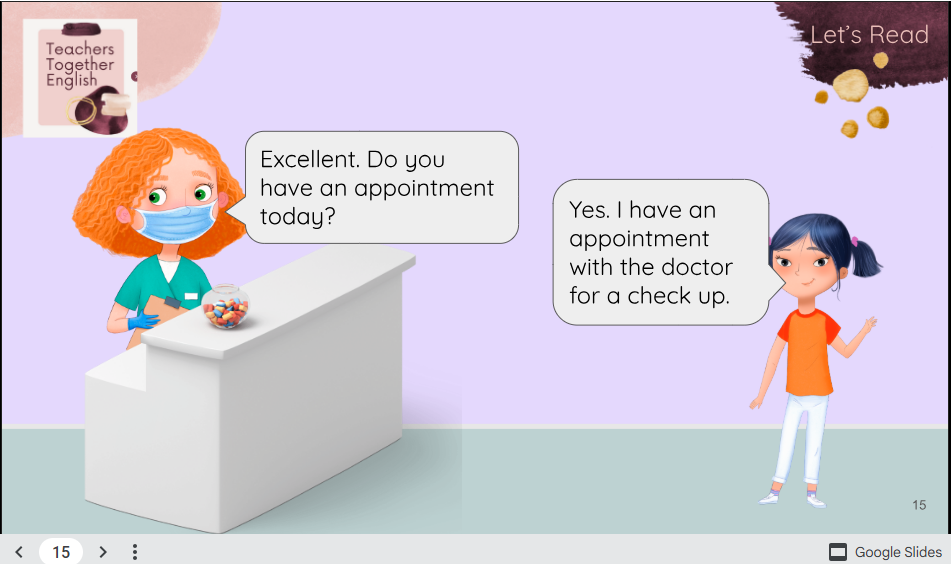
- Role-play real-life situations that require specific grammar forms, such as ordering food (modal verbs) or asking for directions (prepositions). Role-play activities are included in many of the lessons in the Teachers Together English curriculum.
3. Use Technology and Interactive Tools
Digital resources can make grammar practice more engaging. Try:
- Kahoot! or Quizizz: Create interactive grammar quizzes.
- Online Grammar Games: Websites like ESL Games Plus offer fun grammar activities.
- AI Chatbots: Let students practice forming sentences by chatting with AI tools.
4. Make It Visual with Charts and Diagrams
Using visual aids to teach grammar can help students grasp grammar concepts more easily. Use:
- Grammar mind maps to show connections between tenses and sentence structures.
- Color-coded sentences to highlight different parts of speech.
- Infographics to break down complex grammar rules.
5. Encourage Collaborative Learning
Students learn better when they work together. Try:
- Peer Teaching: Have students explain grammar concepts to each other.
- Group Sentence Building: Give groups a set of words and challenge them to form grammatically correct sentences.
Grammar in Speaking vs. Writing
Grammar plays a crucial role in both spoken and written English, but the way it is used differs significantly between the two.
- Speaking: In spoken English, grammar is often more flexible. Native speakers frequently use contractions, informal structures, and even omit certain words in casual conversations. For example, “Gonna” instead of “going to” or “I dunno” instead of “I don’t know.” When teaching grammar for speaking, focus on natural phrasing, fluency, and commonly used structures rather than rigid correctness.
- Writing: Written grammar is generally more formal and structured. Students need to pay closer attention to punctuation, complete sentences, and proper tense usage. Teaching grammar for writing should emphasize clarity, coherence, and accuracy.
How to Teach Grammar in Both Speaking and Writing Effectively:
- Use dialogue practice and role-plays to reinforce grammar in speaking.
- Assign short writing tasks to help students apply grammar rules in a structured way. The downloadable worksheets from Teachers Together English from Level 3 Unit 6 and up include writing tasks for lessons 5 and 10.These are similar to writing tasks students may encounter on an English exam such as the Cambridge English exams. Most of these tasks are real-life tasks such as writing or responding to an email, writing a letter or a short story.
- Encourage students to compare spoken and written grammar by rewriting a casual conversation into a formal email or vice versa.
- Looking for more done for you resources, check out some of the worksheets like this one ESL Regular Comparative and Superlative Adjectives Grammar Worksheet.
Final Thoughts
Grammar lessons don’t have to be dull! By incorporating games, storytelling, technology, visuals, and collaboration, you can teach grammar in a way that is fun and effective. Engaged students are more likely to retain information and apply grammar rules correctly in real-life situations.
Join Teachers Together English Today!
Looking for a structured ESL curriculum that makes grammar fun and engaging? Check out Teachers Together English for ready-to-use lesson plans, interactive activities, and expert teaching strategies. Sign up today and transform your grammar lessons!
